This is the page that explains how spider control actually works, from the species we treat across the Treasure Valley to the reason store-bought sprays disappoint people. If you want the Meridian-specific version, we have a dedicated spider control in Meridian page. Wherever you are in the valley, the method is the same, and it is built around one fact most homeowners never hear: spiders are not like other bugs, so you cannot treat them like other bugs. Call (208) 949-5184 and we will take it from there.
The spiders we treat across the valley
The Treasure Valley has a consistent mix of spiders, and knowing which one you have matters, because they live in different places and only a couple deserve real caution. For a fuller identification guide, see spiders in Idaho. These are the six most common ones.
Hobo spider
A quick brown funnel weaver that builds low, sheet-like webs in rock beds, window wells, and crawl spaces. The males roam indoors in the fall looking for mates. Their old reputation for causing serious wounds has largely been walked back by researchers, but few people want them in the house.
Western black widow
Glossy black with the red hourglass underneath. Widows favor quiet, undisturbed spots: garages, meter boxes, woodpiles, sheds, and the underside of patio furniture. Bites are uncommon and rarely dangerous, but they are serious enough that you should see a doctor if one happens.
Wolf spider
Large, hairy, and fast, the spider most likely to send someone across the room. Wolf spiders do not build webs. They hunt on the ground and wander in under garage doors and thresholds once the nights cool off.
Yellow sac spider
Small, pale cream, and active at night. It is responsible for more indoor bites than the spiders people usually blame. The bite stings and can leave a red welt, but it heals on its own. By day they tuck into ceiling corners and behind frames.
Cellar spider
The thin, long-legged spider dangling in basements and crawl spaces. The webs look messy and the numbers climb quickly, but cellar spiders pose no threat to people or pets.
Orb weavers
The big wheel-shaped webs that appear across porches and gardens in late summer belong to orb weavers. They look dramatic and they are harmless, eating a steady supply of flying pests. We leave them be unless they are taking over a doorway.
Why ordinary bug spray barely touches spiders
Almost everyone tries a can of spray from the hardware store before they call us, and almost everyone is surprised when it does little. There is a real reason for that, and it comes down to spider anatomy and habits.
Two things protect spiders from a normal surface spray. First, they stand tall on the very tips of their legs, so hardly any of their body ever touches the treated surface. An ant drags its whole underside through a residue. A spider tiptoes across the top of it. Second, spiders do not groom themselves the way ants and roaches do. A cockroach that walks through a product later cleans its legs and mouthparts and swallows a dose. A spider does not, so even the little it picks up rarely gets ingested. A dried film of insecticide that flattens other bugs can leave a spider walking around like nothing happened.
That is why we use Onslaught FastCap, a professional product that is microencapsulated. Instead of drying into a flat film, it leaves millions of tiny capsules on the treated surface. Those capsules catch on the tips of a spider's legs and get carried back to where it rests, which is a completely different way of reaching the spider than a spray that only works if the animal bathes in it. It also gives fast knockdown on the spiders we hit directly, so you get relief now and residual protection after. This is the core of why professional spider work succeeds where the can under your sink fails.
What our spider service includes
Every spider visit follows the same four steps, whether it is your first treatment or your fourth.
- Inspect where spiders actually live We check the eaves, soffits, window wells, weep holes, fence lines, rock beds, the garage, and the crawl space entrance. A few minutes of looking tells us which species you have, where they are nesting, and where they are slipping inside.
-
Take down webs and egg sacs by hand
We brush down the webs we can reach and pull the egg sacs with them. A single sac can hold anywhere from a few dozen to a few hundred eggs. This step is not glamorous and it matters as much as anything we spray, because it removes next season's spiders before they hatch.
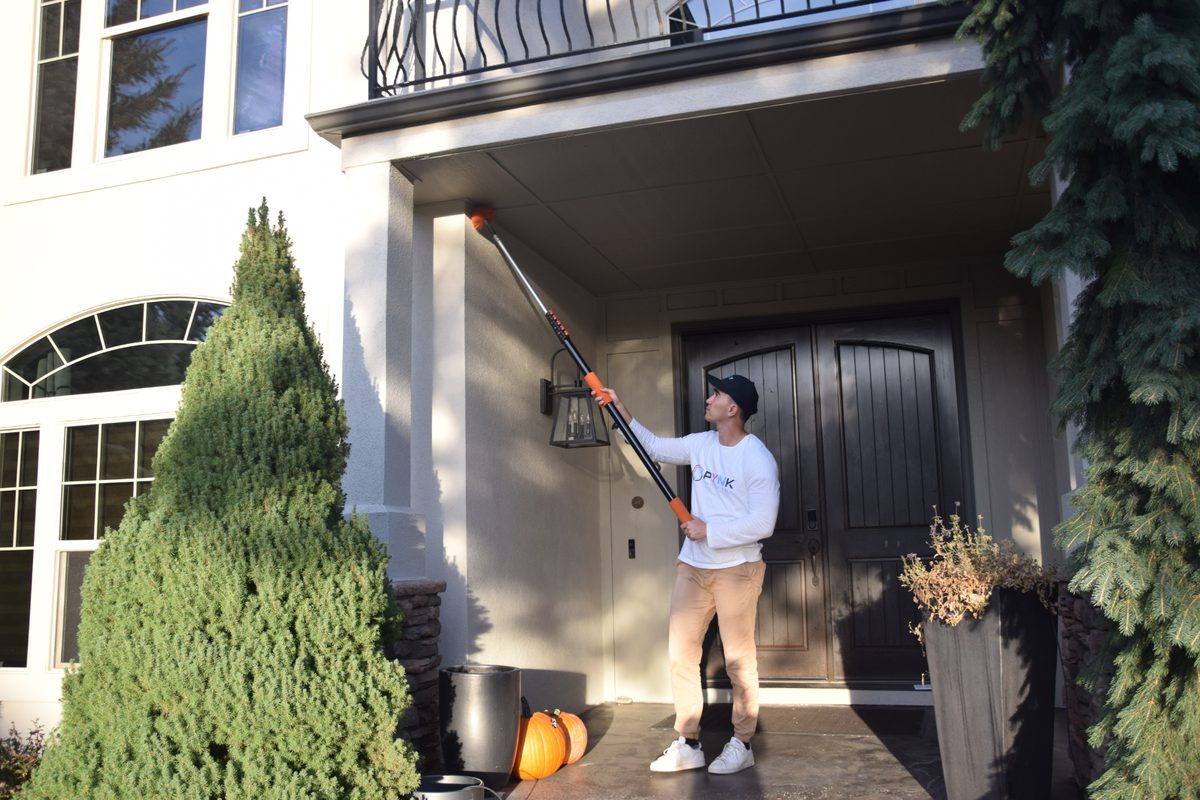
Brushing webs off a porch ceiling. - Treat with a product built for spiders We apply Onslaught FastCap to the harborage points and entry areas. The microencapsulated formula clings to spider legs and keeps working on treated surfaces for weeks, long after we have driven away. Indoors, we keep it targeted to the corners and voids where spiders hide, not your open living space.
- Lay a barrier that cuts off their food A house with fewer insects is a house spiders give up on. We put a Bifen barrier around the foundation and lower walls to knock down the crickets, flies, and other prey that drew the spiders in. Every product is applied according to its label, with kids and pets in mind.
Ready to stop finding webs in every corner? Get your free valley quote today.
Get a Free Quote →Prey reduction: starving spiders out
Here is the part of spider control that most sprays skip entirely. Spiders are predators, and predators go where the food is. A spider does not pick your window well because it likes the view. It picks it because moths gather at your porch light, gnats hover over the damp mulch, and crickets rasp along the foundation all night. Your home built a food court, and the spiders moved in to eat at it.
That means you can spray spiders all day and still keep getting them, as long as the buffet stays open. So we treat the buffet. The same barrier that guards your foundation is knocking down the insects spiders eat, which quietly pulls the rug out from under the whole population. It is a slower, more permanent kind of control than chasing individual spiders, and it is the reason our service reduces spiders over a season rather than for a weekend. It is also why spider control pairs so naturally with our broader general pest control: handling the other bugs is handling the spiders.
What you can do between visits
We would rather you need us less. A few habits make a real difference and stretch every treatment further.
- Switch porch bulbs to warm yellow LEDs. Bright white light draws the night insects that feed spiders. Change the bulb and you thin the food supply at your own front door.
- Knock webs down often. A long broom and a weekly pass make your eaves a frustrating place to rebuild. Persistence wears spiders out.
- Clear the foundation. Move firewood, bricks, and clutter away from the walls. Those piles are prime widow habitat, and the gap you create is easy to inspect.
- Seal the garage door gap. A worn bottom seal is the single busiest spider entrance on most valley homes, especially once the fall wandering starts.
- Shake out stored shoes and gloves. Gear left in the garage is exactly where the rare widow bite tends to happen. A quick shake is cheap insurance.
Seasonal timing and how often
Spiders are active in the valley from spring through late fall, and the numbers spike hard in late summer when the year's spiders reach full size and the males start wandering indoors. We wrote a whole page on that annual surge in September spiders in Idaho if you want the details on why it happens and how to get ahead of it.
As for how often to treat, most valley homes do best on a quarterly rhythm that keeps a fresh barrier up through the spring hatch, the summer buildup, the fall wandering, and the winter push indoors. A single treatment brings numbers down fast, but egg sacs hatch on their own schedule and new spiders wander in from neighboring yards and fields, so light coverage rebuilds over a season or two. We break down the full reasoning in how often to spray for spiders in Idaho, and you can see the whole pest year in the Treasure Valley pest calendar. Whichever cadence you choose, the guarantee is the same: spiders return between visits, we return at no charge.
Common spider questions
Does spider control treat the inside of my home too?
Yes, where it is needed. Most spiders come in from outside, so the heavy lifting is done around the exterior and at the entry points. Inside, we treat the corners, basements, crawl spaces, and storage areas where spiders actually hide, and we remove the webs and egg sacs we find. We keep interior product targeted rather than blanketing your living space.
What is the difference between spider control and a general pest plan?
Spider control is a general plan with spider-specific steps added on top. Every visit still includes the exterior barrier that handles ants, wasps, and other pests, but we also remove webs and egg sacs by hand and use a product built to stick to spiders. If spiders are your main complaint, this is the service to ask for. If you have a mix of pests, the general plan already covers spiders too.
Will treating for spiders also cut down the other bugs I see?
Yes, and that is central to how it works. Spiders are predators that settle wherever the hunting is good, so our service treats the insects they feed on at the same time. The exterior barrier around the foundation knocks down the crickets, flies, and other prey that made your home attractive. Fewer bugs on the menu means fewer spiders deciding to stay.
There are spiders in my yard eating other bugs. Should I just leave them?
Outside and out of the way, many spiders are worth leaving alone. Orb weavers and other outdoor hunters eat a lot of pests and rarely bother anyone. The ones worth controlling are the species that move indoors or nest where people reach, like hobo spiders in window wells and widows in the garage. We focus on those and leave the harmless outdoor spiders to do their job.
Can you treat for spiders before an outdoor party or event?
Yes, a one-time treatment before an event knocks activity down fast. We remove the webs, treat the eaves, patio, and entry points, and put down the barrier so the yard is far more comfortable by the time guests arrive. Book it a few days ahead so the products have time to work. We will be honest that a single visit is a short-term fix, not season-long protection.