The short answer: a first visit is mostly an outside job. The technician inspects the property, applies a barrier treatment around the foundation and entry points, knocks down and removes spider webs and egg sacs by hand, and treats indoors only where there is an active problem. You get a service note describing what was found, what was treated, and what to watch for. Plan to unlatch the gates and keep pets in during the visit.
A first pest control visit sounds more disruptive than it is. There is no tenting, no long list of demands, and usually no need to leave the house. It is a methodical trip around the outside of your home with targeted work where it counts, and the goal of the first visit is bigger than the pests you can see today. It is to set a clean baseline the rest of your plan builds on. Here is exactly how it goes, step by step.
The visit, step by step
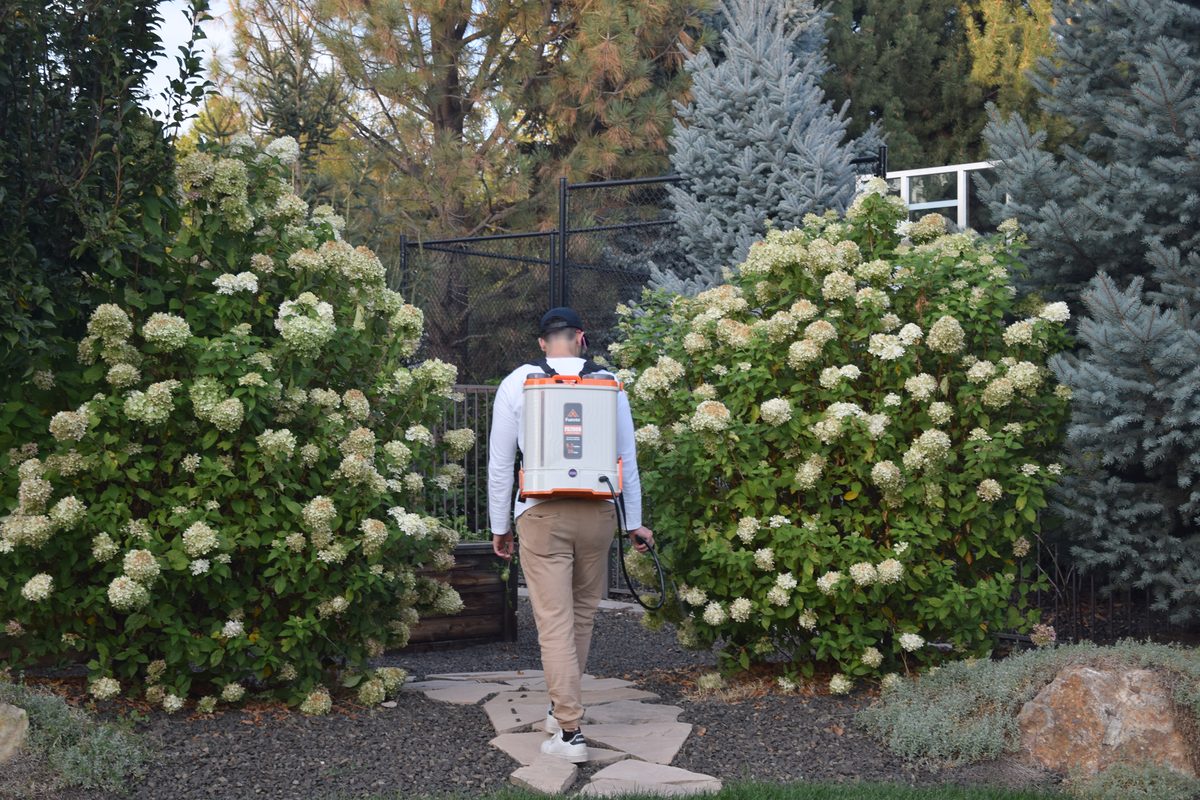
- The walk-around inspection The technician circles the property and reads it: the foundation and entry points, the eaves, the moisture spots, the conducive conditions like mulch against the wall or a gap under the garage door, and whatever you have been seeing. This is where a first visit earns its length, because the treatment is only as good as the read behind it.
- The exterior barrier A continuous band goes around the foundation and lower walls. We rely on a Bifen perimeter treatment here, a long-lasting band that pests cross as they try to enter, and it dries clear and odorless. This is the backbone of the whole service.
- Web and egg sac removal by hand We knock down and remove the spider webs and egg sacs we find around the eaves, corners, and siding. This is the step cut-rate services skip, and it matters, because one egg sac is the next generation. Removing the sacs we find is a generation canceled before it hatches.
- Targeted treatment where pests live Wasp nests get knocked down and their rebuild spots treated. For ant trails we use a non-repellent product like Termidor or Taurus that ants cannot detect, so they walk through it and carry it back to wipe out the colony at the source instead of just the ants on the patio. For spiders and fast relief we use Onslaught FastCap, which knocks pests down quickly and keeps working on treated surfaces.
- Interior only as needed If you have an active problem inside, we treat those spots with targeted spot and crack-and-crevice work, not a blanket indoor spray. If everything is exterior, we stay exterior.
- The service note Before we leave you get a plain-language note: what we found, what we treated, the nests and sacs removed, and the small fixes that will stretch the results.
Every product is applied strictly to its label, with kids and pets in mind. If you want the fuller product rationale, the general pest control and spider control pages go deeper on why each one is used.
What the first visit does, and does not, do right away
The knockdown on contact pests is fast, but full control takes a little time as products transfer and pests flush out of hiding, which is why a brief uptick in activity in the first week is normal and even a good sign. We break the timeline down on our page about how long pest control takes to work. The honest framing: the first visit resets the property, and the plan keeps it reset.
How the first visit sets up your plan
That clean baseline is the point. From there, a recurring schedule keeps the barrier fresh and the webs cleared through the seasons, which is the logic behind the quarterly plan, four visits mapped to Idaho's pest year. Recurring plans carry the Pynk Guarantee: if pests come back between scheduled visits, we come back at no extra charge. The first visit is where all of that starts.
Ready to set the baseline? Book your first visit and we will send the simple prep ahead of time.
Get a Free Quote →First-visit questions, answered
Will the technician go inside my house on the first visit?
Only if there is an active indoor problem. A standard first visit is an exterior job: the barrier, web and egg sac removal, and the entry points are all handled from outside. If you are seeing pests inside, we treat those spots too, with targeted spot and crack-and-crevice work rather than a blanket indoor spray. You decide how far inside we go, and nothing indoors happens without your say-so.
How long does the first pest control visit take?
It is a single visit, not an all-day job, but the first one runs longer than later ones because it includes the full walk-around inspection and the initial web and egg sac removal. The exact time depends on the size of the property and how much buildup there is to clear. You do not have to follow the technician around the whole time, though pointing out problem spots at the start helps.
Will I see dead bugs or more bugs after the first visit?
Often a brief uptick, then a steep drop. The treatment flushes pests out of cracks and voids, so seeing more activity in the first week or two is normal and actually a sign it is working. Products keep acting on treated surfaces as pests cross them. Activity should fall off sharply after that. If it has not eased within about two weeks, call us, and on a recurring plan the return visit is free.
What is in the service note the technician leaves?
A plain-language summary of the visit: what pests and conducive conditions we found, what we treated and where, the webs and nests we removed, and any recommendations, like a garage door seal or a moisture fix, that will make the next visit more effective. It is your record of the work and your to-do list of small fixes that stretch the results between treatments.
Does the first visit cover the garage?
Yes. The garage is one of the most important zones on the whole property, because the garage door is the busiest pest entrance on most Idaho homes and the space collects spiders, box elder bugs, and the occasional mouse. We treat the garage interior and its entry points as part of the visit and check the door seal, which is one of the highest-value fixes a homeowner can make.